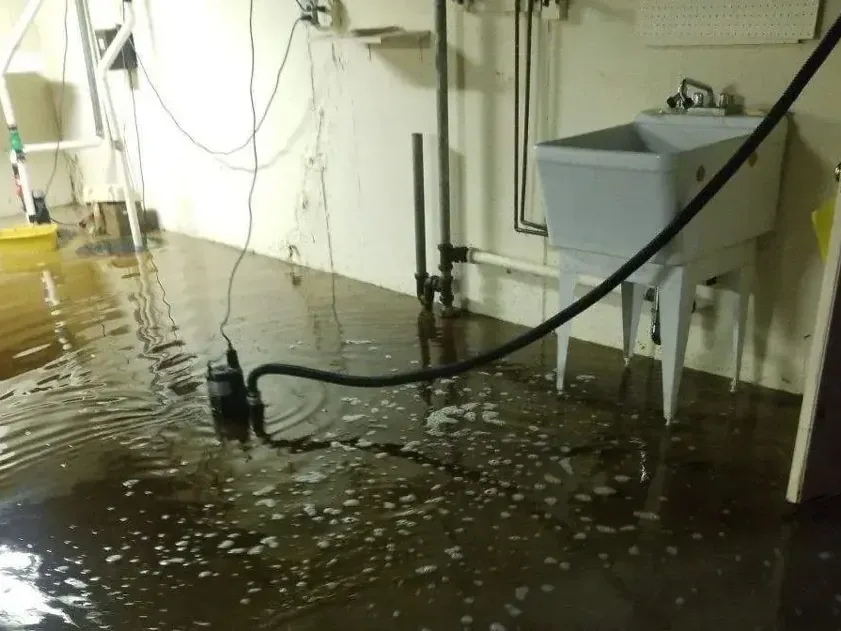
A sump pump needs electricity, and the storms that raise the water often take the power out. In Harvard, the icy storm of January 24, 2023 left about half of the town's electric customers without power. The sections below explain how outages and wet weather overlap, what keeps a pump running and what the cleanup involves when it stops.
Key takeaways
- The icy storm of January 24, 2023 left about half of the town's electric customers without power.
- In December 2008, an ice storm devastated northern Worcester County, and many residents of the southern part of town lost power for over a week.
- A pump that loses power cannot run, so a household that relies on a sump pump can flood even when the pump is in good shape.
- A battery backup or a generator helps, but each has limits, and a generator runs outdoors only.
- The regional hazard plan rates heavy rain and snow melt as high risks.
Why outages and wet weather arrive together
Storms that bring heavy rain, wet snow or ice can also bring down trees and utility wires. The dates below show the storms that have hit town.
The Montachusett Region Natural Hazard Mitigation Plan rates heavy rain and snow melt as high risks for the region, and the town's 2019 resilience workshop named extreme precipitation a priority hazard.
When an outage and wet weather arrive together, the repair crews are busy with the roads and the utility wires first, and a household with a stopped pump waits.
- December 2008: an ice storm, a state of emergency and a power loss of over a week for many residents of the southern part of town.
- February 25, 2019: a wind storm sent the fire department to fallen trees on utility wires.
- October 7, 2020: a storm left several roads impassable, including Bolton Road near Slough Road and Littleton Road at Cruft Lane.
- January 24, 2023: an icy storm downed trees and utility wires and left about half of the town's electric customers without power.
What a sump pump needs to keep running
A sump pump is a simple machine with three parts that all have to work: power, the pump and a way out for the water. A failure in any one of them leaves the pit full.
Power
An electric pump stops the moment the outlet goes dead. A float switch tells it when to start, but nothing starts without current.
A pump that is ready
The pit stays clear of silt and stones, the float moves freely and the check valve works.
A discharge that works
The discharge pipe carries water well away from the foundation, and nothing blocks it, from ice to debris to a loose fitting.
Water still spreading? Shut off the main if it is safe. The restoration team extracts, dries to the IICRC S500 goal and documents every step, 24/7.
(888) 629-3140Get the extraction crew movingBackup options and their limits
Two backups cover an outage. Each helps for a while, and each has limits.
Neither backup replaces the basic checks: a clear pit, a working float and a discharge pipe that carries water away.
Battery backup
A battery backup is quiet and starts on its own when the power goes out. It runs for a limited time, so a long outage can drain it.
- Test the battery on a schedule and replace it when it weakens.
- An alarm that sounds when water rises gives warning even when the pump is silent.
Generator
A generator can run longer, but it needs fuel and attention, and it must stay outdoors. Exhaust from a generator can kill, so it never runs in a garage or near an open window.
- Keep fuel stored safely and rotated.
- Run the pump from a properly connected outlet, not from a cord passed through a window.
When the pump stops and the water rises
The first rule is safety. Water and electricity share the lower level, and a house that has lost power can get it back without warning.
Call for sump pump failure cleanup while the utility crews restore power, because the water does not wait for the lights.
A pump that failed once is worth checking before the next storm. A stuck float, a clogged intake or a tripped breaker can stop a pump even when the power is on.
- Stay out of the water until an electrician or the utility confirms power is safe.
- Never run a generator inside the house or the garage.
- Photograph the water level and the stopped pump.
- Move what can be moved to higher shelves from dry ground.
- Call for water extraction as soon as the storm allows.
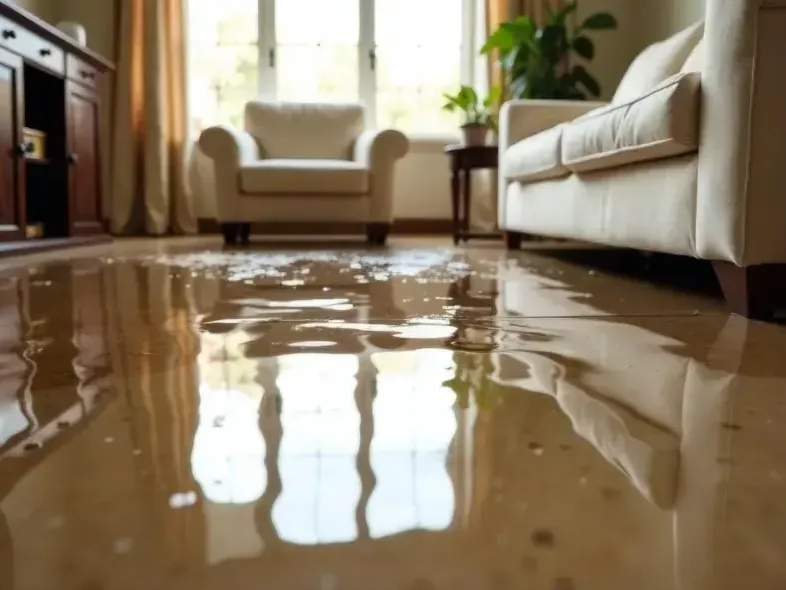
What the cleanup removes after an outage flood
Water and soaked materials
Extractors pull the standing water first. Groundwater and runoff are not clean, so carpet, pad, insulation and the lower part of drywall that sat in them usually come out, which is the work of basement flooding cleanup.
Drying and checks
Dehumidifiers and air movers run on walls, floors and framing, with readings at each visit. The crew also notes whether the pit, the float and the discharge pipe work, because a dry basement that floods again helps no one.
What a long outage does to the rest of the house
A pump that stops is not the only water risk in an outage. A house that loses heat in winter can see supply pipes freeze, which brings frozen pipe water damage into the same storm.
The January 2023 storm closed Harvard Public Schools and downed trees and utility wires, and the December 2008 outage lasted over a week for many in the southern part of town. A plan that covers days, not hours, is the one that holds up.
- Know where the main water shutoff is, and how to drain the pipes if the house goes cold.
- Check the lower level at the start and the end of every long outage.
- Keep an eye on the forecast when snow melt and rain are both expected.
A storm readiness checklist
A few steps before the storm make the outage easier. The same checklist applies to any house with a pump, and the main pump failure cleanup service follows these steps.
- Test the pump by pouring water into the pit, and listen for the float.
- Charge and test any battery backup.
- Keep fuel and a safe outdoor spot for a generator.
- Charge phones and keep a flashlight near the stairs.
- Move stored items onto shelves before a storm.
- Know where the electrical panel and the water shutoff are.
Questions
Can a sump pump run during a power outage?
Not without a backup. An electric pump needs current, and a battery or a generator can supply it for a limited time.
Is it safe to run a generator in the garage?
No. A generator must run outdoors, away from windows and doors, because the exhaust carries carbon monoxide.
When should a sump pump be tested?
Before storm season and after any long outage. Pouring water into the pit shows whether the float and the pump start.
Did the 2008 ice storm cause long outages in town?
Yes. Many residents of southern Harvard lost power for over a week, while the loss was minor in northern Harvard.
What should be done first when water rises and the power is out?
Stay out of the water, keep away from electrical equipment and call for water extraction.
Does a battery backup keep a pump running for a whole outage?
Not always. It runs for a limited time, and a long outage can drain it, so a household that depends on one watches the charge.
