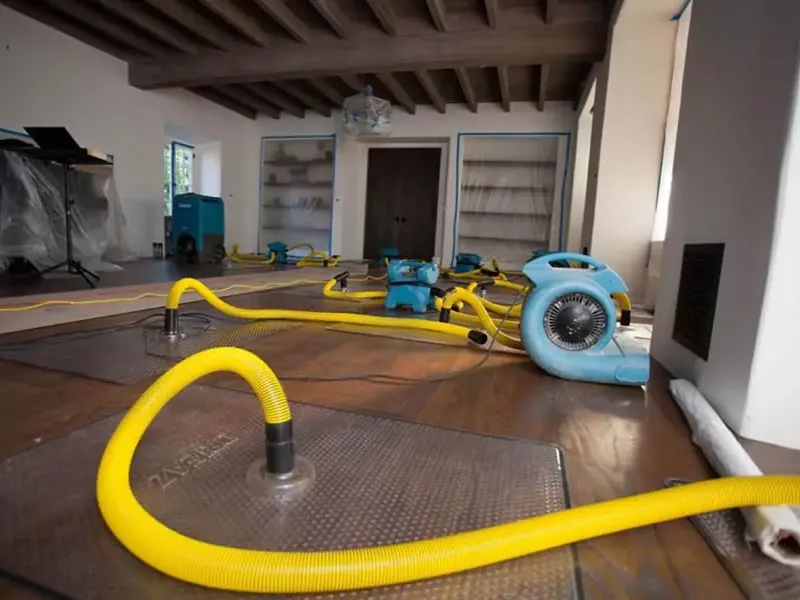
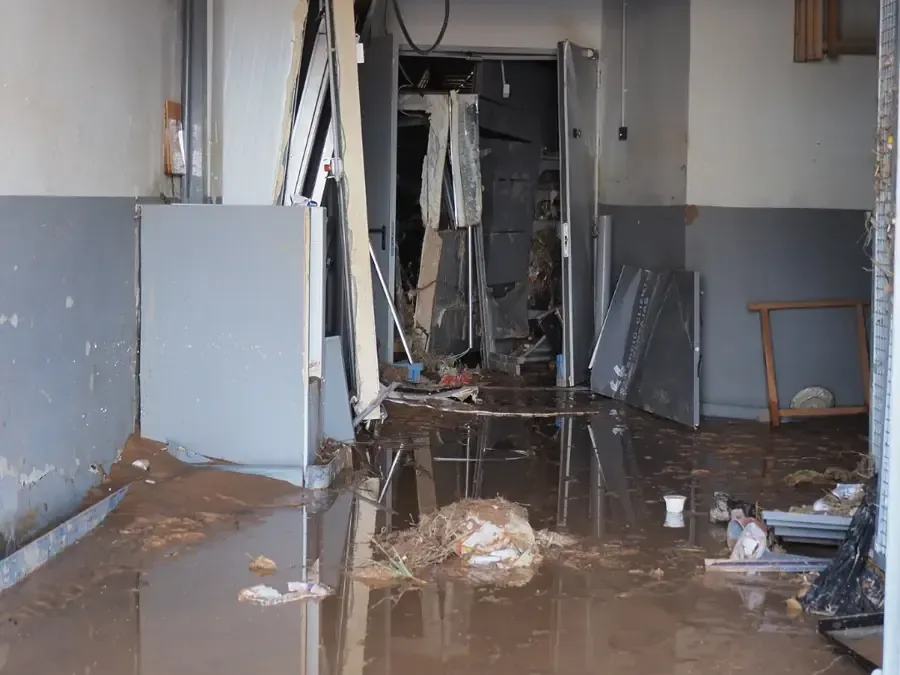
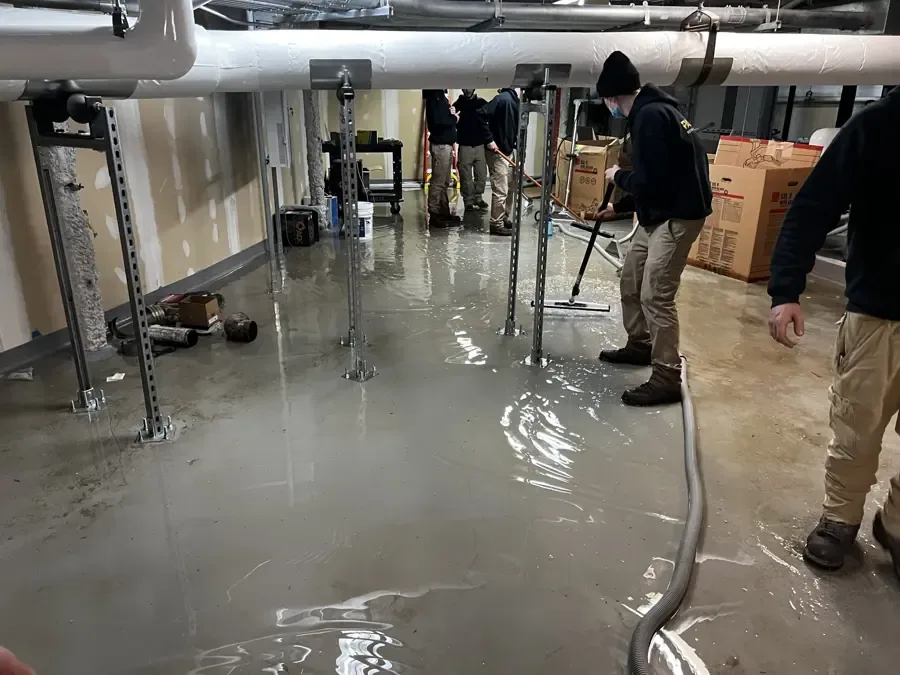
Structural drying is the part of the job that decides whether problems show up months later. Water inside a wall cavity, under a floor or in plaster keeps evaporating slowly, and it feeds odor, swelling and the 24 to 48 hour mold growth window if nobody measures it.
How the drying team sizes the equipment
The IICRC S500 standard groups losses by class, from Class 1 (little water, mostly low-porosity materials) to Class 4 (dense materials such as hardwood, plaster, brick and concrete). The class sets how many air movers and how much dehumidification each room needs.
- Air movers sit along wet walls and across wet floors, set to the room's evaporation load
- LGR dehumidifiers pull water from the air so evaporation keeps going
- Desiccant dehumidifiers handle cold basements and dense Class 4 materials
- Containment with plastic sheeting focuses the drying on the wet area