
On July 16, 2023, heavy rain flooded Birch and Hobson streets in Fitchburg. Pavement buckled, a clogged hillside drain sent floodwater downhill toward homes, and utility crews shut off gas service in the neighborhood. The sections below explain how a blocked drain turns a hillside into a channel, who handles which part of the problem and what cleanup looks like inside a house.
Key takeaways
- On July 16, 2023, a clogged hillside drain sent floodwater downhill toward homes on Birch and Hobson streets.
- Runoff from a hillside carries soil, road grit and debris, so the water is treated as contaminated.
- In that storm, utility crews shut off gas service in the neighborhood, so gas appliances and electrical equipment near water need a professional check before anyone goes in.
- The DPW asks residents to call its dispatcher about weather related flooding, while the restoration crew deals with water inside the building.
- Silt left behind by runoff has to come out with the water, or it dries into a crust on floors and framing.
What happened on Birch and Hobson streets
Heavy rain on July 16, 2023 flooded Birch and Hobson streets and buckled pavement. A hillside drain clogged, and the water that could not enter it ran downhill toward homes.
A drain that stopped taking water
A storm drain only works while it is open. Once debris blocks the opening, the rain that would have gone underground stays on the surface.
Water that kept moving downhill
On a slope, surface water speeds up and follows the steepest path. Utility crews shut off gas service in the neighborhood while the water moved, which shows how far the effects of one blocked drain can spread.
How hillside runoff differs from a plumbing leak
A pipe leak starts in one place and is clean water at first. Runoff starts outdoors, crosses pavement, yards and soil, and arrives all at once.
A hillside adds speed to all of that. Water that runs downhill picks up more silt and debris on the way, and it reaches a house carrying more force than the same amount of water on flat ground.
- It carries silt, gravel and road grit that settle on floors.
- It can carry oil, fertilizer and sewage mixed in from the surface.
- It arrives with force and speed, so doors and low windows can give way.
- It can keep coming while the rain continues, so cleanup waits for the water to stop rising.
- It leaves a muddy residue that hides damage until the silt is cleared.
Water still spreading? Shut off the main if it is safe. The restoration team extracts, dries to the IICRC S500 goal and documents every step, 24/7.
(888) 629-3140Get the extraction crew movingSafety first: gas, power and moving water
When floodwater reaches a lower level, the first danger is often not the water. It is the gas appliance, the outlet or the panel sitting in it.
In July 2023, utility crews shut off gas service in the neighborhood. A household that smells gas, or that finds water around a furnace, water heater or panel, waits for the utility or an electrician before going in.
- Stay out of standing water near a panel, an outlet or a gas appliance.
- Call the gas utility if there is a gas odor.
- Keep children and pets away from the water and the silt.
- Wear boots and gloves for any contact with the water.
Who to call and what to record
Hillside flooding involves more than one set of responders, and each one handles a different piece. A short list and a few notes make the first day simpler.
Who to call
- The DPW asks residents to call its dispatcher about street flooding and weather related events, and to report catch basins and manholes.
- The gas utility or an electrician checks appliances and panels that sat in water.
- The restoration crew removes water, silt and wet materials inside the building, and starts storm flood cleanup.
- The property owner decides on repairs once the readings show the structure is dry.
What to record
Notes about where the water entered help later. A door that took water once will take it again if the grading stays the same.
- Photograph the street, the yard and the water as it enters the house.
- Write down the time the water was noticed and when it stopped rising.
- Note which doors, windows or cracks the water used.
- Photograph the silt mark on walls and furniture before cleaning.
- Keep a list of damaged items with a short description of each.
- Save the time and the details of any call to the DPW or the gas utility.
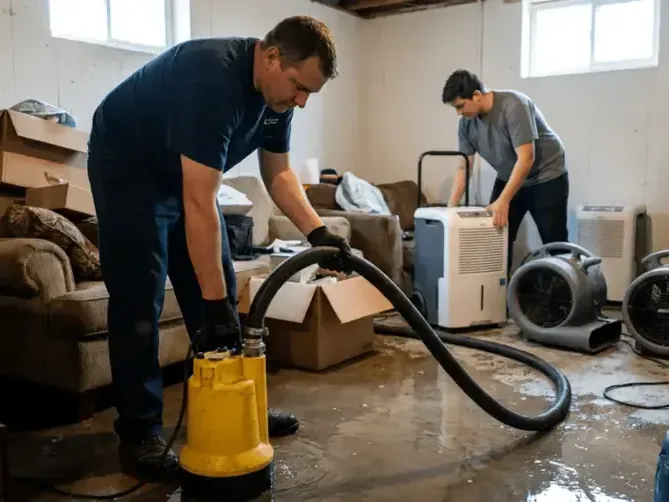
What extraction removes first
The order of work follows the water. Standing water goes first, then the silt, then the soaked materials.
Mud and silt
Water extraction pulls the standing water, but runoff leaves a layer of silt behind. The crew shovels or vacuums it from floors and low shelves before it dries into a crust.
Porous materials
Carpet, pad, insulation and the lower part of wet drywall that sat in runoff usually come out, because the water carried contamination into them.
Hard surfaces and framing
Concrete, tile and solid framing stay. The crew cleans them, then dries them with air movers and dehumidifiers until readings match dry reference materials.
Planning for the next downpour
The city's watershed flood plan says more frequent and intense rain events are causing flooding. In 2022, the city finished a flood reduction plan for the Falulah and Baker Brook watershed, using state Municipal Vulnerability Preparedness funding.
The city is also developing designs for sections of Coolidge Park near Falulah Brook to help reduce downstream flooding along John Fitch Highway. Those projects work on a larger scale than one blocked drain, and a single household still has to plan for the next downpour.
A cleanup does not fix the reason the water came. The next storm will use the same path if the drain blocks again.
A household that has been through this can also look at water damage restoration for the area to plan ahead.
- Report a clogged catch basin or manhole to the DPW.
- Clear leaves and debris from gutters and any yard drain on the property.
- Check where downspouts and driveways send water, and redirect it away from the house.
- Keep photos of the yard after rain to show where water gathers.
- Large flood projects take years, while a clogged drain can fail in one storm.
- A household controls its own gutters, downspouts and yard drainage.
- A cleanup plan that is ready beforehand saves the first day from chaos.
Questions
Is runoff from a hillside considered clean water?
No. It crosses pavement, yards and soil before it enters the house, so it is treated as contaminated and porous materials usually come out.
Why does silt matter after a flood?
Silt carries bacteria and dries into a hard crust that traps moisture against floors and framing. It has to be removed, not just rinsed.
Who should be called about a clogged street drain?
The DPW asks residents to call its dispatcher about flooding and to report catch basins and manholes.
Can a lower level be cleaned up while it is still raining?
Standing water can be pumped, but more may arrive while the rain continues. The crew often makes a second pass once the water stops rising.
What helps if a hillside has flooded before?
Photos, notes about where the water entered and the level it reached help the crew plan, and they show where to direct water the next time.
Can gas appliances be used again after floodwater touched them?
Not before a qualified technician checks them. Gas controls and burners that sat in water can fail unsafely, and a utility or a technician can confirm they are safe.
