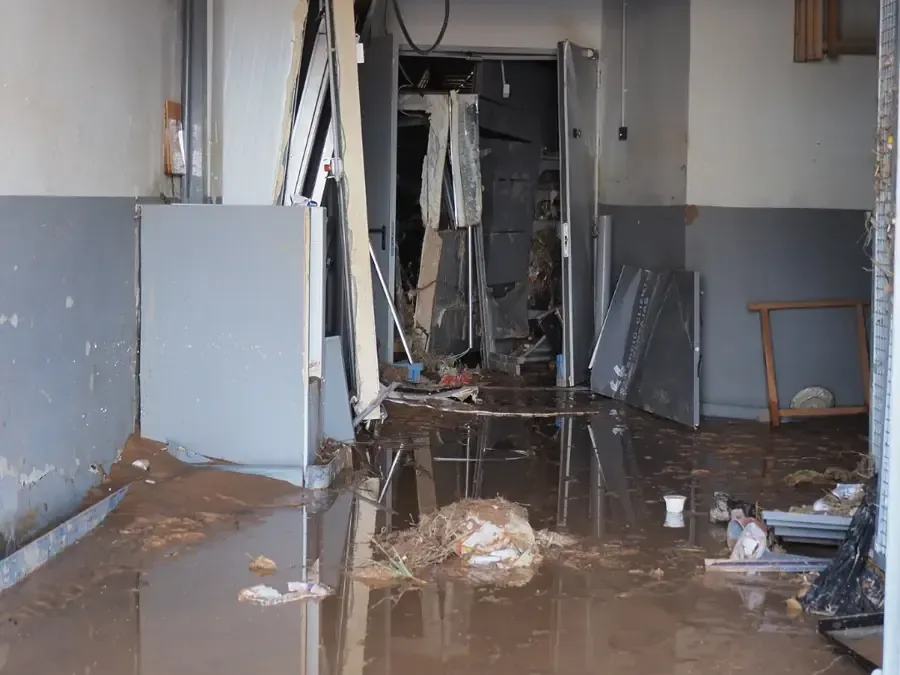
In March 2010, heavy rain sent the Nashua River to its worst flood in 23 years, and it flooded Lancaster and Clinton. About two weeks later, new flooding closed the same roads again. The sections below cover what happened, why the second round of water matters and how a basement is pumped and dried.
Key takeaways
- The Nashua River flooded Lancaster in March 2010 and again about two weeks later, closing Bolton Road, Center Bridge Road and Route 117 each time.
- In the second flood, firefighters pumped residential basements around the clock, and the fire chief said fewer calls came in because residents had bought their own pumps.
- A basement that has not finished drying when new water arrives starts again with softened, saturated materials.
- Pumping empties the room, but only drying and moisture readings show whether walls, framing and floors are ready for repair.
- The fire chief said the Bolton Road and Center Bridge Road soup bowl area is hit by both the Nashua River and the Wachusett Reservoir.
Two floods in two weeks
March 16 and 17
Flooding from the rainstorms of March 16 and 17 closed Bolton Road, Center Bridge Road and Route 117 for three days. Several residents pumped out their basements.
The town administrator called it one of the worst floods the town had seen.
Late March
About two weeks later, new flooding closed Bolton Road, Center Bridge Road and Route 117 from Main Street to Route 110 again. Firefighters pumped residential basements around the clock.
A shelter opened at a college fieldhouse for flood victims from Lancaster and Clinton.
The soup bowl area and the town's flood history
Bolton Road and Center Bridge Road form what the town's fire chief called the soup bowl area of southern Lancaster. The chief said it is hit by both the Nashua River and the Wachusett Reservoir.
Basements in that area took on water in March 2010. Afterward, residents bought their own pumps, and the fire chief said fewer calls came in than before.
The 2010 floods were not the first. The town's 2022 Hazard Mitigation Plan names the Nashua River and the Still River as flood zones.
The plan lists steps such as larger culverts on Route 117 and Route 110 as proposed actions only, so a household cannot count on them.
The roads stayed closed for three days after the first flood. When water stays high for days, walls and floors keep taking on moisture the whole time, so drying has to measure what remains.
- March 1936: the Great Flood destroyed homes and property.
- 1938: the Great Hurricane damaged trees and bridges and for a time left only one route out of town.
- April 2007: Center Bridge Road, Bolton Road and Route 117 reopened once the Nashua River receded, after a newspaper headline called the flooding the worst in 15 years.
- March 2010: two floods, about two weeks apart.
Water still spreading? Shut off the main if it is safe. The restoration team extracts, dries to the IICRC S500 goal and documents every step, 24/7.
(888) 629-3140Get the extraction crew movingWhy a second round of water does more harm
The two floods came about two weeks apart, which is long enough to start drying and short enough to lose that work.
- Materials that are still damp absorb new water faster than dry ones.
- Drywall and wood that softened in the first flood lose strength in the second.
- Drying equipment placed after the first flood has to be reset, and the readings start over.
- Silt from the first flood can sit on the floor and mix with the new water.
- Progress made on drying can be lost in a day.
Pumping comes first, drying decides the outcome
The work runs in a fixed order, and the order protects the structure.
- Standing water comes out in stages when the ground outside is still wet.
- Silt is removed from the floor and the wall bottoms.
- Carpet, pad and soaked insulation that sat in river water come out.
- Hard surfaces are cleaned and disinfected before drying starts.
- Moisture readings mark the starting point and the finish.
Extraction
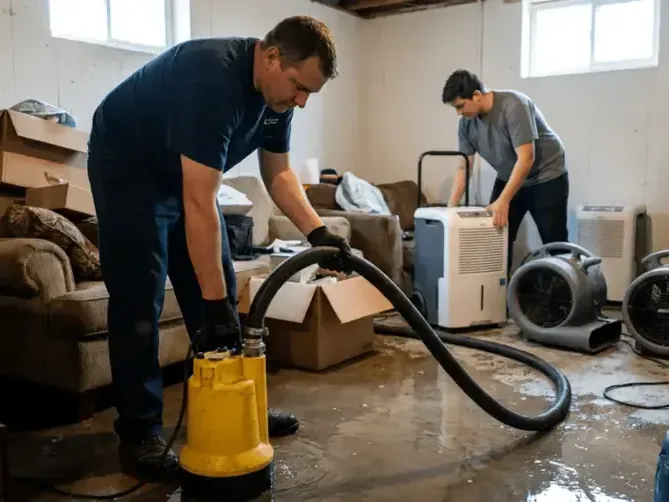
When the ground outside is still saturated, the crew may lower the water in stages, because wet soil and water can press hard on an emptied basement. Water extraction uses pumps and extractors to take down the standing water at a safe pace.
Drying and readings
After the water is out, the crew takes moisture readings on the floor, the wall bottoms and the framing. Dehumidifiers and air movers run until each reading matches a dry reference, which is the heart of basement flooding cleanup.
What a household pump does and does not do
Residents who bought pumps after March 2010 gave themselves a tool, not a plan. A pump moves water out.
It does not dry the walls, remove soaked carpet or clean silt.
A failed pump during high water is its own problem, and sump pump failure cleanup starts where the pump stopped.
Pump owners also learn the limits of their own system. A pump that runs for days is working hard, and it can overheat or clog when the pit fills with silt.
- A pump needs power, and a storm can cut it.
- A pump needs a discharge pipe that sends water well away from the foundation.
- A pump runs better with a clean pit and a float that moves freely.
- A backup pump or battery supply helps when the first one fails.
What to do after river water reaches a basement
Steps for the basement
River water carries silt and other contamination, so the steps differ from those for a pipe leak.
- Keep out of the water until the power to the basement is off.
- Photograph the level and the damage before moving anything.
- Lift electronics and papers off the floor.
- Have the water pumped out, in stages if the ground is still wet.
- Plan for drying equipment to stay for days, and keep gutters and the pump discharge clear in case more rain comes.
- Watch the forecast, because the second flood in March 2010 came about two weeks after the first.
Getting equipment to the door
Route 117 carries heavy commuter traffic, and Bolton Road and Center Bridge Road were closed for days in March 2010. A closed road changes how crews, pumps and drying equipment reach a house.
A household that expects water can think through access ahead of time, so equipment can reach the door when the roads reopen.
- Keep a record of alternate routes to the house.
- Keep driveways clear of debris so hoses and equipment can reach the door.
- Tell the crew about any weight or width limits on the way in.
- Know where the electrical panel and the shutoff are so they can be reached quickly.
Questions
Did the Nashua River flood Lancaster before 2010?
Yes. A newspaper headline called the April 2007 flooding the worst in 15 years, and the Great Flood of 1936 destroyed homes and property in town.
How long were the roads closed in March 2010?
Bolton Road, Center Bridge Road and Route 117 were closed for three days after the rainstorms of March 16 and 17.
Why does a basement need drying after the water is pumped out?
Floors, walls and framing hold water that a pump cannot reach, and only drying and readings show they are done.
Should a pump run all day during a flood?
A pump needs a steady power source and a clear discharge. In late March 2010, firefighters pumped residential basements around the clock.
What does a second flood change?
Wet materials absorb water faster, silt returns, and drying restarts from new readings.
Where did flood victims go in March 2010?
A shelter opened at a college fieldhouse for flood victims from Lancaster and Clinton.
