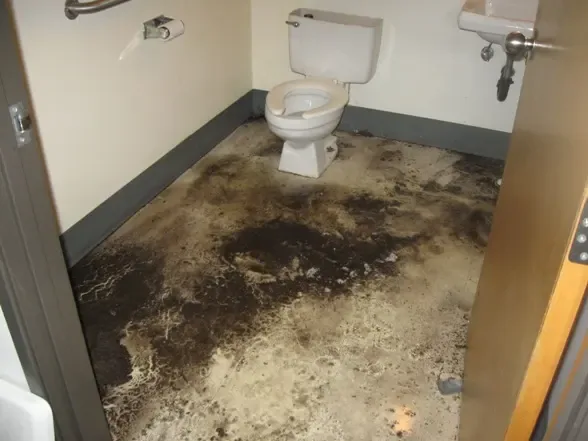
Sterling has no town sewer service. Homes and businesses use private septic systems, so a sewage backup in a house points to the property's own tank, pipes and drain field. The sections below explain the signs of a backup, who handles which part and what the restoration crew removes from the house.
Key takeaways
- Sterling has no town sewer service, and properties use private septic systems, so a backup traces to the property's own system.
- Slow drains in several fixtures, gurgling and odors often come before water rises in the lowest drain.
- Sewage water is treated as Category 3 contamination, so porous materials it touches usually come out.
- A septic professional deals with the tank and drain field, while the restoration crew cleans and dries the house.
- The Board of Health examines Title 5 septic inspection reports, so it is the office tied to septic records in town.
No town sewer in Sterling: what that changes
In a town with a municipal sewer, a backup may start in a main under the street. Here, there is no town sewer service, so the wastewater from a house goes into the property's own septic system.
That puts the system on the property, and it changes the questions after a backup. The first question is not which main is blocked.
It is whether the tank, the pipe to the tank or the drain field has stopped taking water.
A sewer backup and a septic backup can look alike inside the house, but the cause and the fix differ.
A septic backup points to the tank, the pipe between the tank and the house, or the drain field. Each can fail on its own, and each calls for a different repair.
- A tank that is full or damaged.
- A pipe between the house and the tank that is blocked or broken.
- A drain field that is saturated or clogged.
- A blockage inside the plumbing of the house.
Signs a septic system is backing up
A single slow drain is often a local clog. When several fixtures slow down together, the problem is further along the pipe or in the tank itself.
- Slow drains in more than one sink, tub or toilet.
- Gurgling from drains when water runs elsewhere in the house.
- A toilet that backs up when the washer drains.
- Sewage odor inside the house or over the yard.
- Wet or unusually green ground over the drain field.
- Water rising in the lowest drain in the house.
Water still spreading? Shut off the main if it is safe. The restoration team extracts, dries to the IICRC S500 goal and documents every step, 24/7.
(888) 629-3140Get the extraction crew movingWhat to do in the first day after a backup
A backup is both a health problem and a property problem. The first steps keep people safe and keep the damage from spreading.
Every fixture feeds the same system, so running water makes the backup worse.
- Stop using water in the house, including toilets, sinks, showers and washers.
- Keep children, pets and anyone with health concerns out of the affected rooms.
- Turn off power to wet areas only if the panel is dry and the switch can be reached safely.
- Open windows for air if the weather allows, and never mix cleaning chemicals.
- Photograph the affected rooms before cleanup starts.
- Call a septic contractor for the tank and a restoration crew for the house.
What a backup brings into the house
A backup rarely stays in one spot. Water finds the lowest openings first, and the house layout decides where it spreads.
- The lowest drain in the house, whether a floor drain, a shower or a tub.
- Toilets and washer standpipes, which sit on the same system.
- Hallways and bedrooms that share a floor with the bathroom.
Contaminated water
Sewage water carries bacteria and viruses, and the restoration trade treats it as Category 3, the most contaminated class. The cleanup uses protective gear and removes whatever cannot be cleaned.
Porous materials
Carpet, pad, insulation and drywall soak up sewage water and hold it. These materials are usually removed, while hard surfaces are cleaned and disinfected.
- Cleaning alone cannot make carpet pad safe again after sewage water.
- Baseboards and wall bottoms are checked for hidden wetness.
Who handles which part
A septic backup involves several trades, and each one works on a different part of the problem.
A clear order helps. The tank and field come first, because the cleanup is pointless if the system keeps sending water back into the house.
- A septic contractor pumps and inspects the tank and checks the drain field.
- A plumber repairs the pipes inside the house. In Sterling, plumbing work goes through a person registered with the Building Department, and a permit is required.
- The Board of Health examines Title 5 septic inspection reports and is the office tied to septic records.
- The restoration crew removes the sewage water, then cleans, disinfects and dries the house through sewage backup cleanup.
What the cleanup removes, cleans and dries
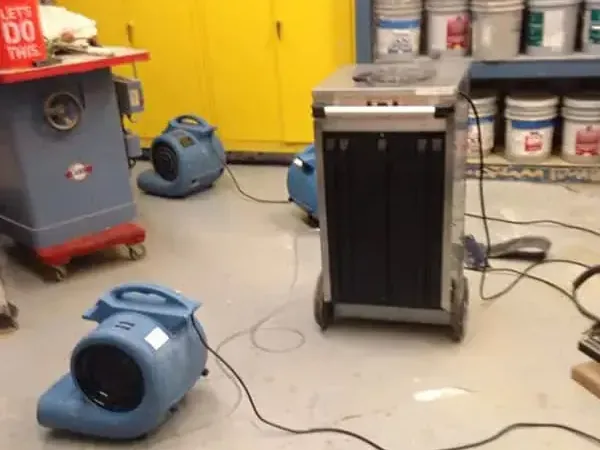
The crew starts with water extraction, pulling the contaminated water out before it spreads. Then it removes porous materials, cleans hard surfaces and applies an antimicrobial treatment.
Drying follows. Dehumidifiers and air movers run until moisture readings match dry reference materials.
- Extraction of standing sewage water.
- Removal of carpet, pad, insulation and wet drywall.
- Cleaning and disinfecting of floors and wall bottoms.
- Drying and a final set of moisture readings.
Keeping a septic system from backing up again
The Master Plan calls the town primarily a rural, residential community, and most of its housing is single family detached homes. That means households here rely on their own systems.
A septic system works quietly until it does not. Small habits keep it working, and a septic professional can set a pumping schedule for the household.
The main septic and sewage backup cleanup service follows the same steps in any town, because a backup that reaches the house is the same kind of cleanup anywhere.
- Keep grease, wipes and paper towels out of the drains.
- Spread laundry across the week instead of running several loads in a day.
- Keep vehicles and heavy equipment off the drain field.
- Fix dripping faucets and running toilets that add water all day.
- Keep records of pumping and inspections together in one place.
Questions
Does Sterling have a town sewer?
No. Sterling has no town sewer service, and properties use private septic systems.
Is sewage water dangerous?
Yes. It carries bacteria and viruses, which is why the trade treats it as Category 3 and removes porous materials it touched.
Can a household clean up a small backup alone?
A very small spill on a hard floor can be cleaned with gloves, disinfectant and good ventilation. Anything that reached carpet, walls or a large area needs a crew.
Who looks at septic inspection records?
The Board of Health examines Title 5 septic inspection reports.
How is a septic backup different from a clogged drain?
A clogged drain affects one fixture. A septic backup affects several fixtures at once, or the lowest drain in the house.
Does heavy rain cause septic backups?
Wet weather can slow a drain field and make a weak system fail, but a backup has more than one possible cause. A septic professional can tell which one applies.
