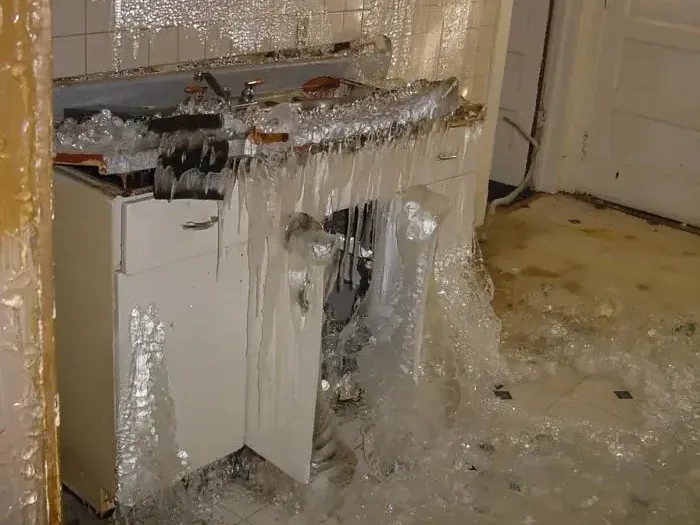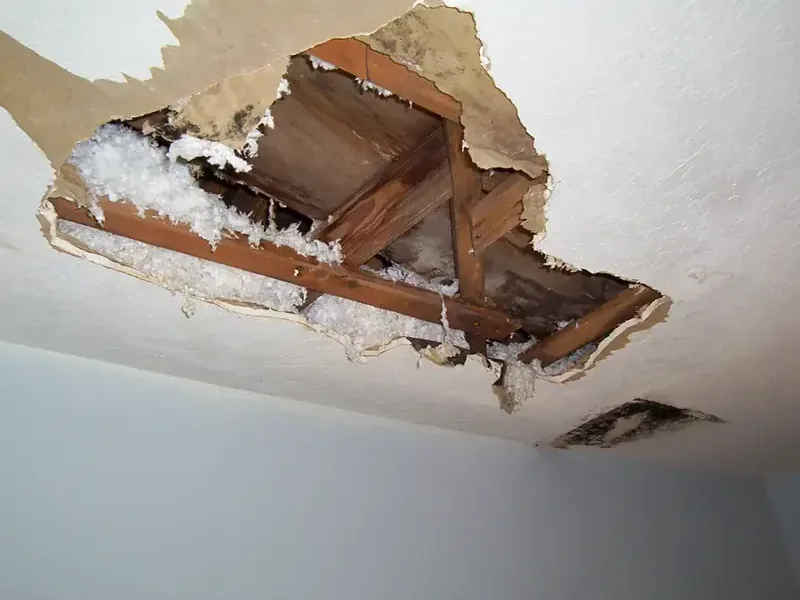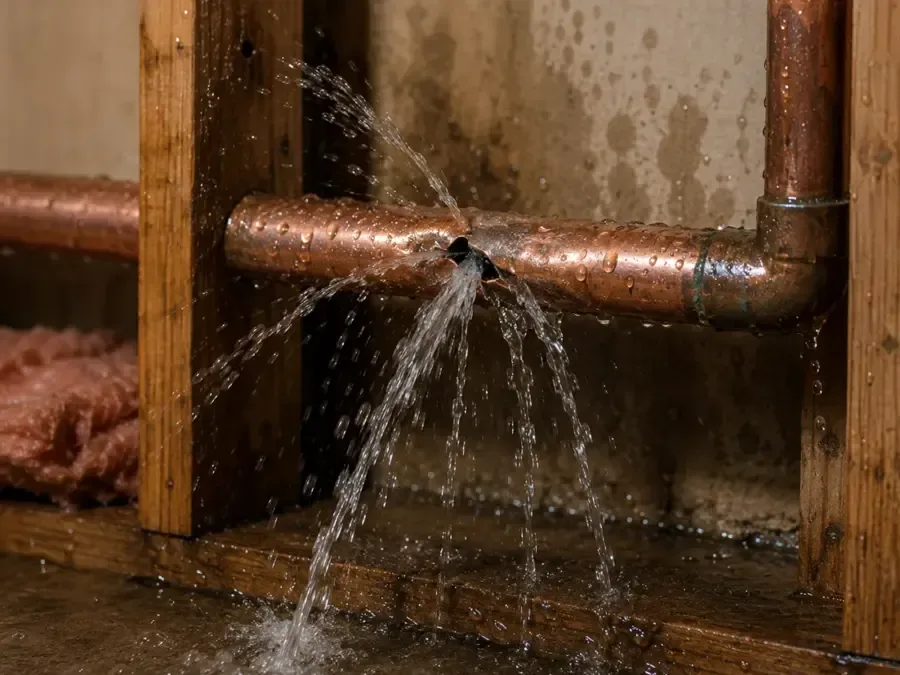
A burst pipe moves a great deal of clean water in a short span, and where state housing data show 43% of units sitting in buildings built before 1939, that water often meets plaster, layered floors and stacked ceilings.
Tracing the wet path
The crew starts at the shutoff, then follows the water outward. Moisture meters and a thermal camera find wet plaster, subfloor and wall bottoms, and the crew opens only what reads wet. Standing water goes out through wands, as described under water extraction, before any cut is made.
- Ceilings below the leak get checked even when they look dry
- Soaked plaster comes out in sections instead of being left to sag
- Wet insulation leaves the cavity so air can move through it
- Floor layers get readings before anyone calls them dry