A water heater leaks in two ways: a slow weep from a corroded seam or fitting that soaks the floor for weeks, and a sudden failure that releases the whole tank. Either way, Fitchburg crews dry the same materials, and the pace of the leak decides how far the water traveled.
Slow weep or sudden failure
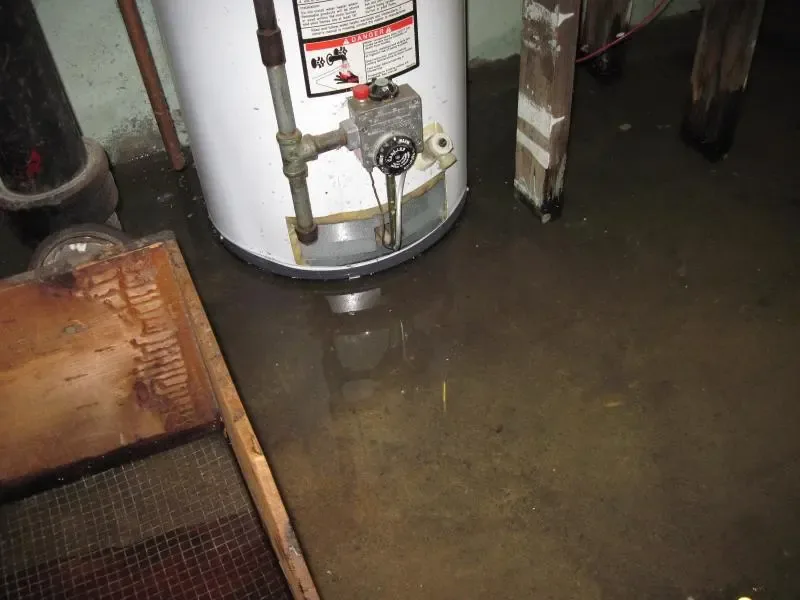
A slow weep leaves rust rings, swollen baseboards and a musty edge to the room, while a sudden failure sends the whole tank across the floor at once. The crew extracts what is standing, then tests every nearby surface with a moisture meter.
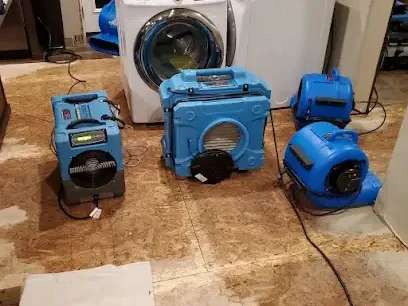
- Concrete floors are extracted, then dried with dehumidifiers
- Wood subfloors get probed with meters for hidden dampness
- Wall bottoms open when drywall has wicked up the water
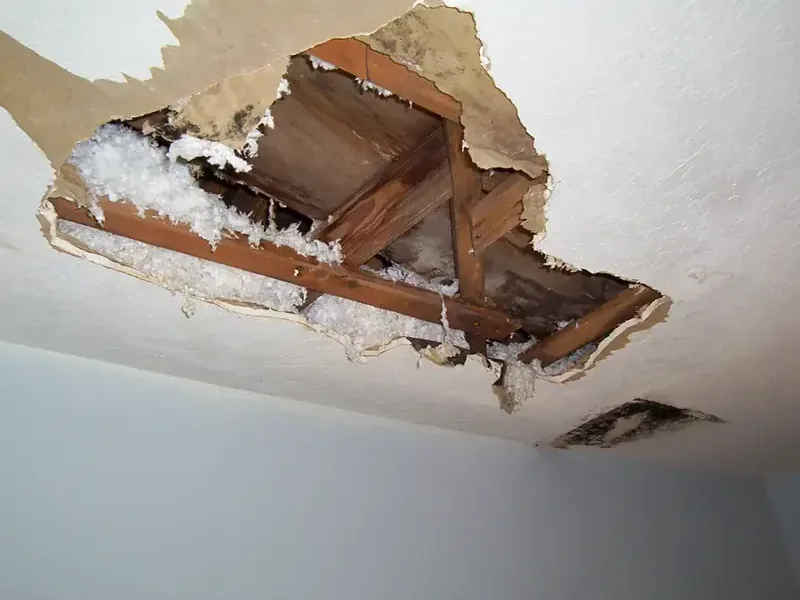
- A ceiling below an upper floor tank is checked and opened if wet