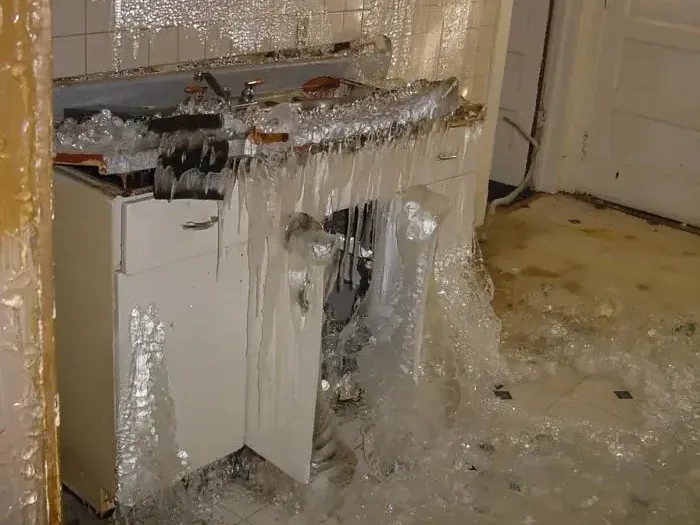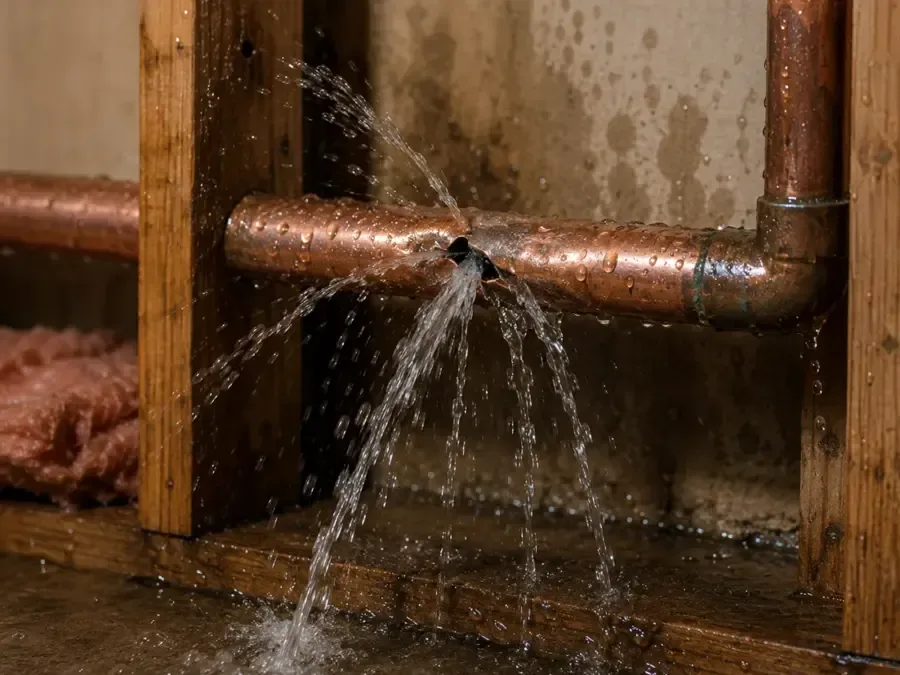
A burst pipe moves more water in a short time than almost any other loss, and the water travels down through ceilings, light fixtures and wall cavities. Crews in Harvard start at the valve, then follow the water level by level.
Following the water downward
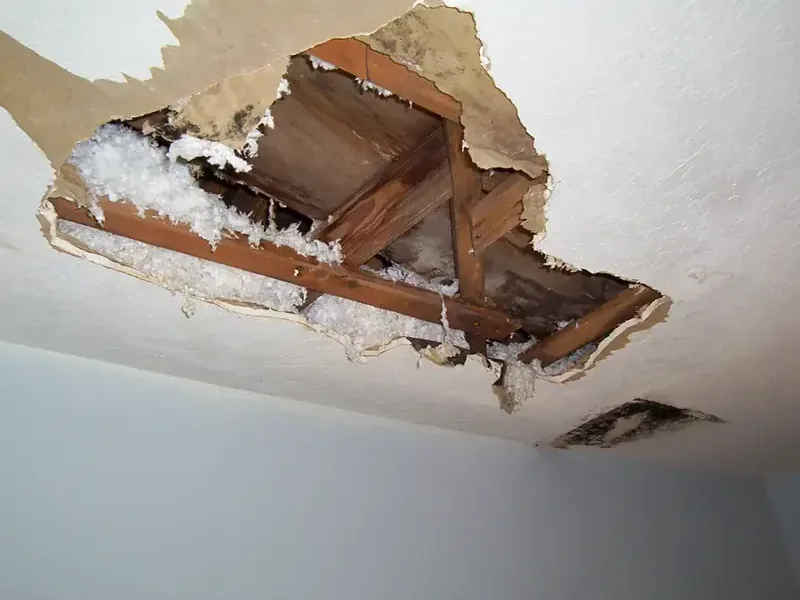
Water from a failed pipe takes the easiest path, so a wet kitchen floor can mean a soaked ceiling below and wet insulation beside it. Crews read the ceiling first, since a sagging section holds water and can fall, and release it through a small opening before it spreads. Power to wet ceilings goes off first.
- Main valve closed and the pipe isolated
- Ceilings below checked for sagging and bulges
- Light fixtures left off until they are dry
- Floors extracted and subfloor mapped with meters