At the NOAA gauge on the North Nashua River, flood waters reach low railroad bridges, and impacts show up at businesses near the junction of River and Depot Streets. John Fitch Highway also floods often because it sits in a floodplain. A written plan makes the first day orderly. The sections below cover what a shop or office owner decides before and after the water arrives.
Key takeaways
- The NOAA gauge on the North Nashua River lists flood impacts at businesses near the junction of River and Depot Streets.
- John Fitch Highway floods frequently because it sits in the floodplain and the historic path of Baker Brook.
- A first day plan covers people, power, stock and records, in that order.
- Commercial drying works in zones, so part of a building can often stay in use while another part dries.
- Dated photos and an inventory of what got wet make later decisions clearer.
Where flood impacts show up in Fitchburg
Fitchburg grew as a 19th century industrial center where water powered mills made machines, tools, clothing and paper, and paper mills lined the banks of the Nashua River into the early twentieth century. The river that shaped the mill town still shapes where water goes.
The Army Corps of Engineers built flood walls in 1937, after the March 1936 flood. Separately, the city's 2020 Hazard Mitigation Plan made flood reduction from Baker Brook a top priority, and the NOAA gauge lists impacts near River and Depot Streets.
Two sources matter for owners: the river near River and Depot Streets and Baker Brook along John Fitch Highway. A plan names which one applies to the address.
A first day plan for a shop or office
The plan below puts people first, then power, then what the business can still save.
People and power
Staff and customers leave first. The owner or manager turns off power to wet areas from a dry panel, or has an electrician do it.
- Keep everyone out of standing water, especially near registers, coolers and server racks.
Customers and visitors
Customers leave next, with a clear path to the exit. A sign on the door and a note on the business phone message tell people the doors are closed and when to check back.
- Close the doors and keep the sidewalk clear of equipment.
- Post a short notice with a contact name for deliveries and customers.
Stock and records
Paper records, inventory and electronics go up first, onto tables, shelves or into a dry room.
A business that lists what got wet can decide faster what to save and what to replace. The list does not need to be perfect, only dated.
- Stock on the floor, with a count or a rough value for each type.
- Equipment that sat in water, such as coolers, registers, printers and servers.
- Paper files, forms and records that are wet or at risk.
- Fixtures, shelving and displays touched by the water.
- Flooring, wall finishes and ceilings that show damage.
Documentation
Dated photos of the water level, the stock and the floor, taken before anything moves, give the rest of the plan a record to work from.
Water still spreading? Shut off the main if it is safe. The restoration team extracts, dries to the IICRC S500 goal and documents every step, 24/7.
(888) 629-3140Get the extraction crew movingWhat commercial extraction and drying involve
Commercial space is large and varied, so the crew works in a set order: extraction, moisture mapping, then drying by material.
Extraction and moisture mapping
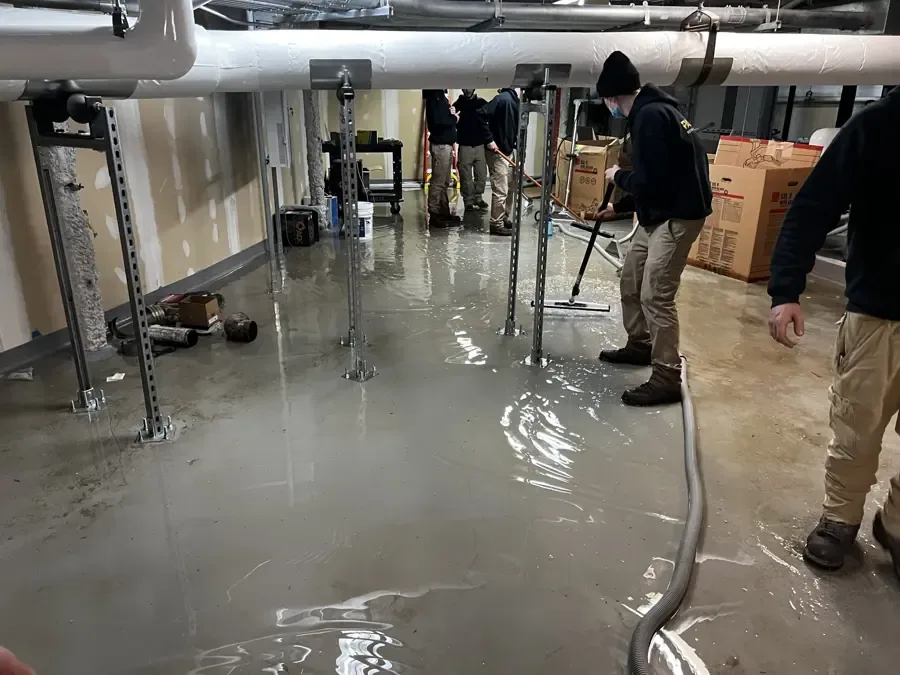
Commercial floors are larger than a house floor, and water spreads further before anyone notices. The crew uses truck mounted and portable extractors for standing water, then maps moisture across the floor, the walls and the framing for commercial water damage.
Older buildings from the mill town era carry different materials in different places, so readings decide the plan. Concrete, wood, plaster and drywall all dry at different speeds.
- Extractors pull water from open floor areas and aisles.
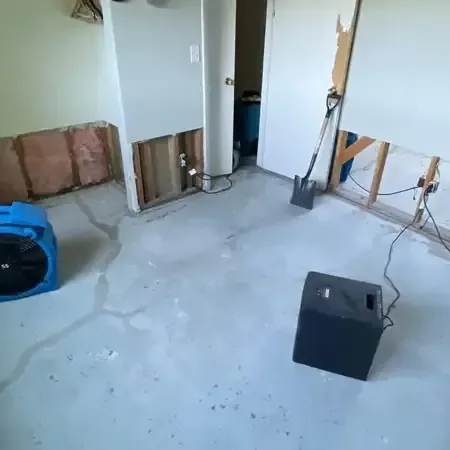
- Wet carpet, pad and insulation come out.
- Dehumidifiers and air movers run in zones.
- Readings track each zone until it matches a dry reference.
Concrete and masonry
Concrete floors and masonry walls hold water deep inside. They dry slowly and need steady dehumidification.
Wood and framing
Wood floors, counters and framing take on water at the bottom edge. They dry faster than masonry, but they can warp or cup if the drying is rushed.
Drywall, plaster and ceilings
Wet drywall and plaster often come out near the floor. Ceilings below a leak or above a flood need checks for trapped water.
Keeping the doors open, and reopening safely
Keeping part of the space in use
A closed business loses income every day, so the plan looks for ways to reopen part of the space. Equipment can sit in a back room while the sales floor opens, or the reverse, and structural drying follows that layout.
- Zone the building so drying equipment sits in one section.
- Move stock and counters to a dry area.
- Keep cords, hoses and equipment off customer walkways.
- Set a schedule for when readings are taken, so staff know when the crew is working.
Last checks before customers return
A business reopens when the space is safe, dry and clean enough for the public. The last checks happen before the doors open.
- Readings match the dry reference in every zone.
- Floors are clean and clear of slip hazards, hoses and cords.
- Electrical equipment that sat in water has been checked by an electrician.
- Odors are gone, because lingering smells tell customers something went wrong.
- Signs and barriers mark any area still under repair.
Who needs a call besides the restoration crew
A business has more people to tell than a household does. A short call list kept near the register or the office saves time in a flood.
- The DPW dispatcher, for street flooding and weather related problems.
- The property owner or landlord, if the space is leased.
- The gas and electric utilities, if equipment sat in water.
- Employees, so they know whether to come in.
- Suppliers, if stock or deliveries are affected.
Preparing before the next river event
The gauge reading on the North Nashua River is public, so an owner can watch it when heavy rain is forecast. A few steps before the water rises shorten the cleanup, and a plan for storm flood cleanup belongs in the same folder.
- Keep stock and records off the floor on shelves in low rooms.
- Photograph the space when it is in normal condition.
- Mark the main water shutoff and the electrical panel on a floor plan.
- Keep a written call list, and give a spare set of keys to a second employee.
- Check floor drains and clear debris from entrances.
Questions
Why do businesses near River and Depot Streets face flood impacts?
The NOAA gauge on the North Nashua River lists impacts at businesses near that junction, and flood waters at the gauge reach low railroad bridges.
Is John Fitch Highway a flood risk too?
The city says it floods frequently because it sits in the floodplain and the historic path of Baker Brook.
Can a business stay open during drying?
Often part of it can. The crew sets equipment in zones and keeps walkways clear.
What should be photographed first?
The water level, the floor, the stock and any equipment standing in water, before anything moves.
How does commercial drying differ from drying a home?
Larger floor areas, more varied materials and more people moving through mean more zones and more readings.
Who should check electrical equipment that got wet?
An electrician. Equipment that sat in water can fail or shock, even after it dries on the surface.
