Dry to a standard

Structural Drying and Dehumidification in Lancaster

Extraction removes the standing water, but wet framing, floors and walls keep holding moisture. Lancaster crews set air movers and dehumidifiers and read the meters daily until each material reaches its dry goal.

(888) 629-3140Call about drying a wet structure
Air movers and LGR units Cavity drying Daily readings
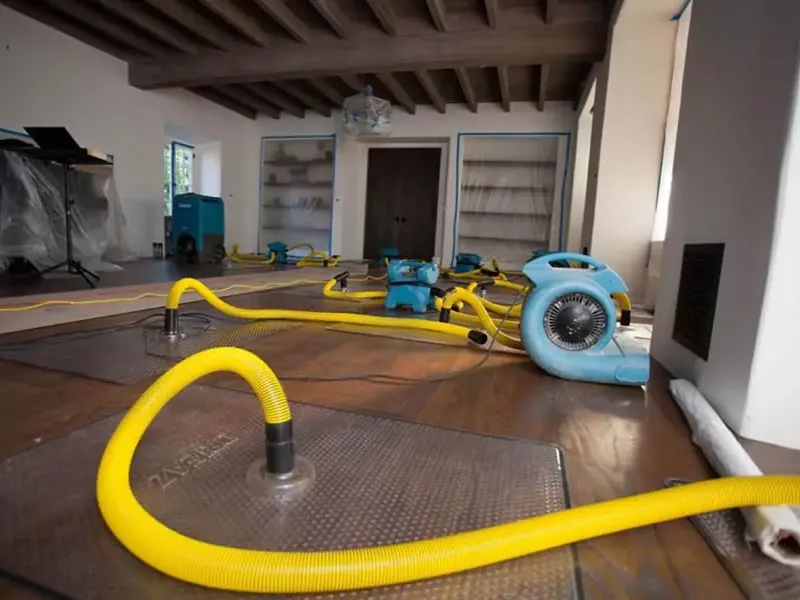
Air movers and a dehumidifier running in an opened wet room
MethodAir movers and dehumidifiers
ChecksDaily meter readings
Ends whenMaterials reach dry goals
Price range$1,500 to $3,500 for one room
Right now

First steps for structural drying and dehumidification

  1. Map the moisture. Meters and a thermal camera find every wet area.
  2. Set the equipment. Air movers and dehumidifiers go where the readings call for them.
  3. Read it daily. The crew returns each day to read and adjust.
  4. Confirm the goal. Final readings show every material at its dry goal.

Drying is a measured job, not a timer. The historic village homes and the subdivisions built in the early 2000s differ in age, so the crew reads each material with a meter and sets the drying goal from the readings, never from the age of the house.

How the drying system works

After water extraction, air movers sweep dry air over wet surfaces while low grain dehumidifiers remove moisture from the room air, so it cannot settle back into the walls. For wet cavities the crew drills or opens small sections and blows air through them, because closed walls dry slowly.

  • Moisture is mapped before any equipment is placed
  • Air movers and dehumidifiers are sized to the room
  • Doors and openings are controlled so the room stays closed
  • Readings are logged daily and the setup is adjusted
Cost

What does structural drying and dehumidification cost in Lancaster, MA?

One room often costs $1,500 to $3,500 to dry, several rooms or a basement $4,000 to $9,000, and a whole house or a Class 4 job $9,000 and up.

One room

$1,500 to $3,500
  • Air movers plus one dehumidifier
  • Meter readings every day
  • Class 1 or 2
Often close to the deductible

Several rooms or a basement

$4,000 to $9,000
  • Containment with LGR units
  • Wall cavity drying
  • Daily written logs
Normally an insurance claim

Whole house or Class 4

$9,000 and up
  • Desiccant dehumidifiers
  • Hardwood, plaster and masonry
  • Longer monitoring period
Normally an insurance claim

Ranges are typical, not a quote. The water category, the square footage, the material class and how fast drying started move the number most. Try the water damage cost calculator for a closer range.

Step by step

The structural drying and dehumidification process

1

Map

Meters find wet areas

2

Place

Air movers and dehumidifiers set

3

Monitor

Daily readings, setup adjusted

4

Confirm

Dry goals checked

Drying older and newer buildings

North Village and Lancaster Center hold homes from the eighteenth and nineteenth centuries, while subdivisions such as Eagle Ridge and Devonshire Estates date to the early 2000s. Hardwood, plaster, framing and concrete dry at different speeds, so the crew records each.

A basement or a ceiling cavity follows the matching page, basement flooding cleanup or ceiling leak water damage.

When drying is finished

Drying ends when every wet material reads at or near its dry goal, and the crew removes the equipment only after that final check. The daily logs, the equipment records and the final readings go to the adjuster, which is the evidence that the structure was dried properly. Rebuild work waits for this sign-off, because closing a wall over damp framing invites trouble later.

Service area

Structural Drying and Dehumidification across the city and nearby towns

Lancaster, MA

Crews set drying equipment in the village centers, the subdivisions and the shops and offices along Lunenburg Road and Old Union Turnpike, and dispatch asks how many rooms got wet.

The same service nearby: structural drying and dehumidification in Leominster, Sterling, Harvard.

All water services for this town
Damp structure? Dispatch answers at any hour. (888) 629-3140
FAQ

Structural Drying and Dehumidification questions

Still dealing with it? Dispatch runs 24/7.

Wet walls or floors still damp?

(888) 629-3140 (888) 629-3140Ask dispatch about drying
How long does structural drying take?

Most jobs run several days, and a basement or a heavy loss runs longer, because the crew keeps the equipment in place until the meters show every material at its dry goal.

Why does the equipment run so loudly all night?

Air movers and dehumidifiers work around the clock because moisture keeps leaving the materials only while the air stays dry and moving, so turning them off for the night slows the drying.

What are the drying classes?

Classes rank how much moisture a loss holds and how fast it will dry, from Class 1 with little wet material to Class 4 with dense hardwood or masonry that needs specialty equipment.

Do older homes dry differently?

Materials dry at their own pace, and the readings matter more than the age of the house, so the crew checks every material with the same meters in an older village home and a newer subdivision house.

Can the equipment come out before the readings are dry?

No, pulling it early leaves moisture in the cavities, and the adjuster expects the final readings, so the crew stays until the log shows the dry goal.

Does drying cost extra on top of extraction?

Drying is usually priced as its own stage because it takes the most days, and a claim treats extraction, drying and any removal as parts of one loss.

24/7 dispatch

Dry the structure to a standard

Dispatch sends a crew that maps the moisture, places air movers and dehumidifiers, and returns daily to read the meters, then hands the adjuster the full log and the final readings.

(888) 629-3140Call about the drying
Leominster Water Damage Restoration Lancaster, MA (888) 629-3140 Open 24 / 7 / 365
(888) 629-3140 · water emergency, any hour