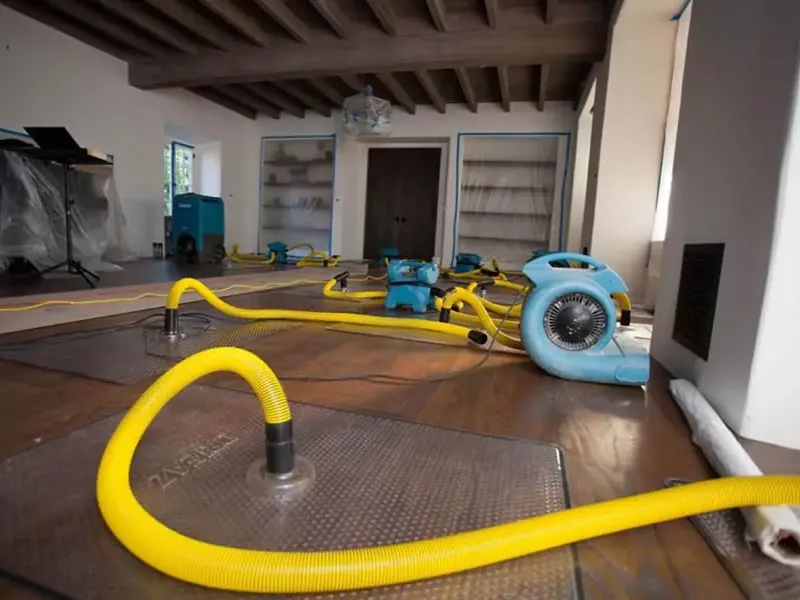
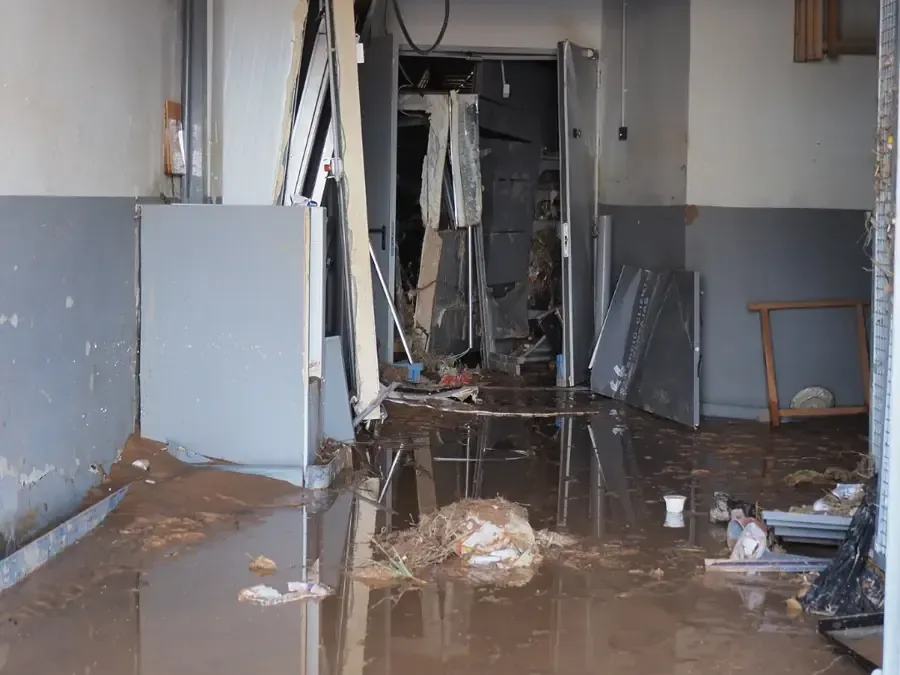
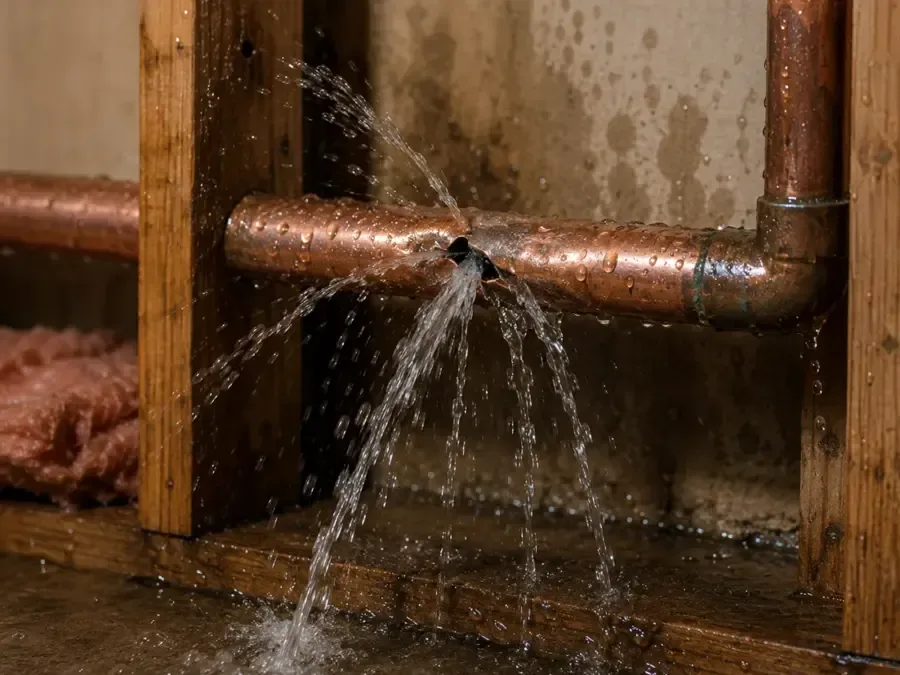
After basement flooding like the March 2010 storms, pumping comes first, and then the walls, framing and floors have to be dried and checked with moisture readings. Drying is a measured process, not a waiting game.
How the drying is planned
Drying goals follow the water class. Class 1 and 2 losses wet a limited area or low porosity materials, while Class 3 and 4 involve ceilings, wall cavities, hardwood, plaster and masonry that hold water deep inside. The crew sets equipment to match, then adjusts it at each visit. A written plan names each room's target and the date the next reading is due.
- Dehumidifiers pull water out of the air so it keeps leaving the materials.
- Air movers push dry air across wet surfaces and into cavities.
- Containment keeps the drying zone small and efficient.
- Daily readings show which areas lag behind.